The one rule that outranks the others
A rug is the room's punctuation mark: it groups the furniture that belongs together. So the rule that outranks every chart is this: size the rug to the furniture group, not to the empty floor. A rug floating in the middle of a room with every piece of furniture standing off it reads as a bath mat that wandered. A rug that reaches under the front legs of the sofa and chairs makes those pieces one deliberate arrangement.
With that rule set, the numbers below are the ones we actually sell, from the 37 cuts across the HazoHaus washable rug range, so every size named here exists on a shelf one click away.
Entries and doorways: 2x3 to 3x5
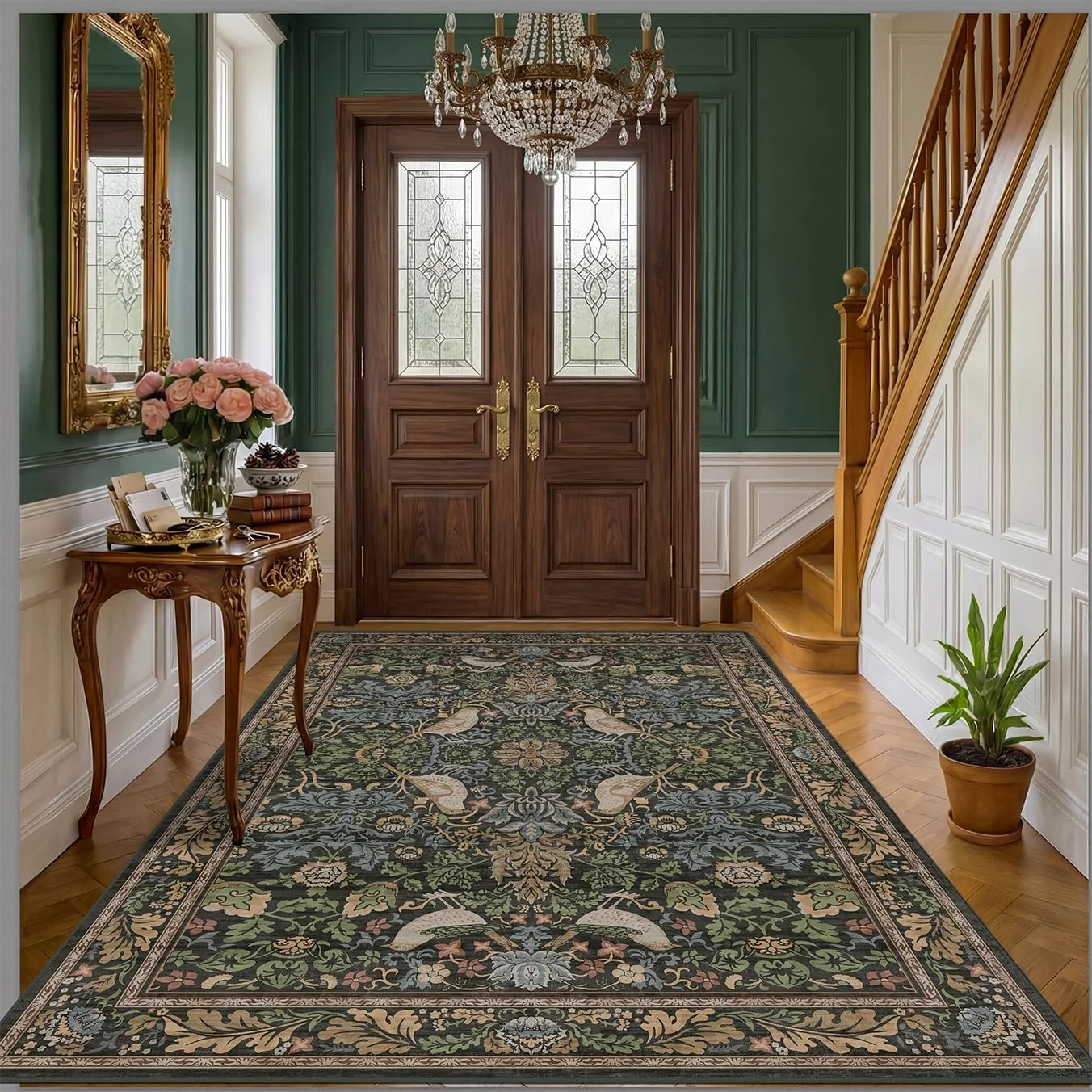
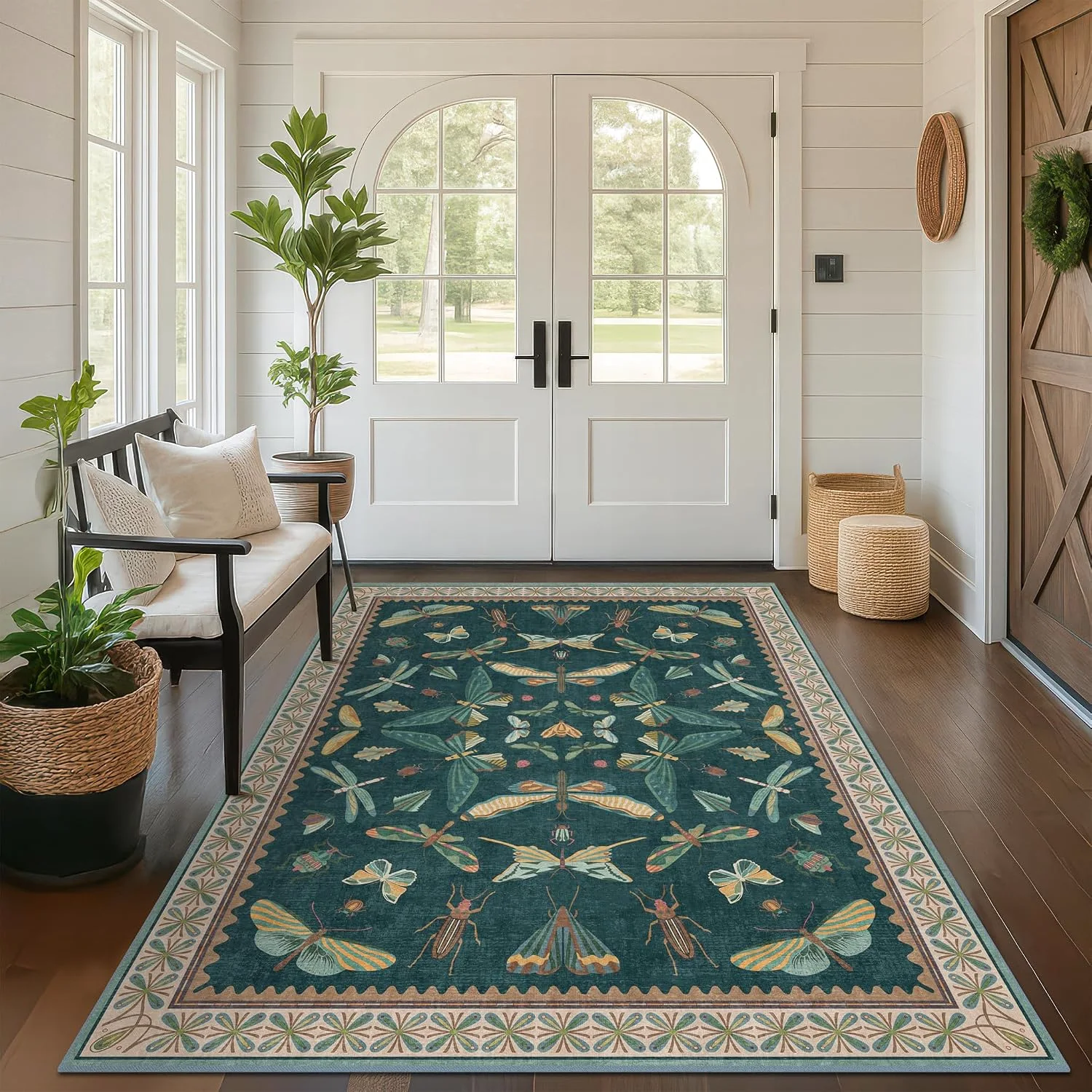
The entry rug is the hardest-working textile in the house, and the reason the low-pile construction exists. A 2x3 covers a single doorway; a 3x4 or 3x5 suits a wider landing or a double door. The quarter-inch pile matters here more than anywhere: the door sweeps over it without catching, so the rug can sit tight against the threshold where grit actually lands.
One measurement to take before ordering: the door's clearance. Open the door, slide a quarter-inch stack of cardboard under it, and if it passes, so will the rug.
Kitchens and halls: the runner sizes
Runners are a third of this catalogue for a reason. The kitchen run in front of the counter takes a 2x5 or 2x6; a galley kitchen or long hall takes 2x8, 2'6"x8 or 2x10; the truly long halls go to 3x12, 3x16 and beyond. Leave a strip of visible floor on each side, around four to six inches, so the runner reads as placed rather than as wall-to-wall that ran out.
| Space | Cut to look at | Why |
|---|---|---|
| In front of the sink or stove | 2x4, 2x5 | Covers the standing zone, washes weekly if it must |
| Full counter run | 2x6, 2'6"x8 | One piece, no seams to trip on |
| Hallway | 2x8 to 2'6"x12 | Four to six inches of floor showing each side |
| Long gallery hall | 3x12 to 3x20 | One continuous line beats two short rugs |
Living rooms: 5x7 to 9x12
Three honest layouts exist, in ascending order of rug and budget:
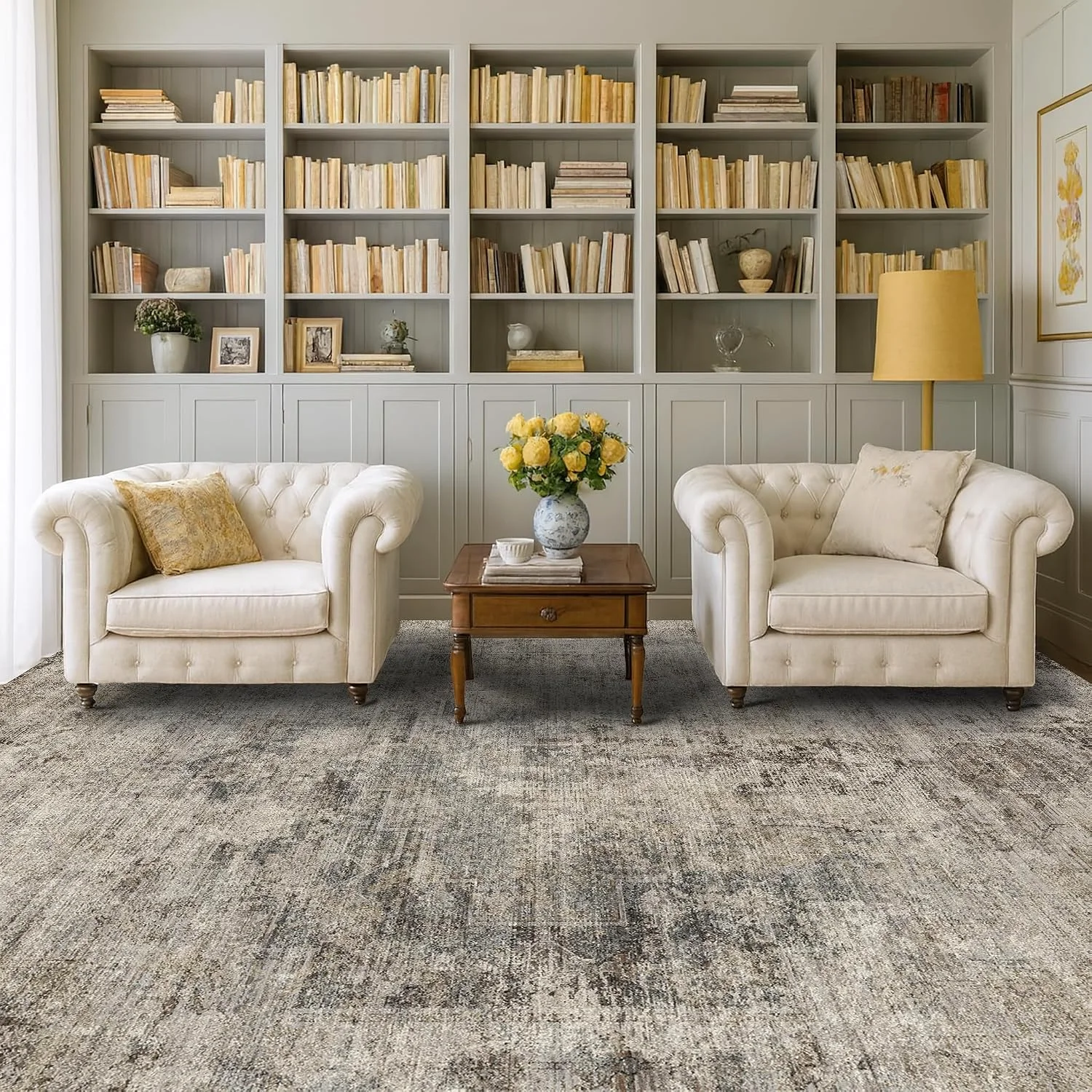
- Front-legs-on, 5x7 or 6x9. The rug reaches under the front legs of the sofa and both chairs. This is the layout most of our living-room reviewers describe, and the one that makes a mid-size rug look intentional.
- All-legs-on, 8x10. Every piece of the seating group stands fully on the rug. The room reads as one island of furniture. Measure the group and add at least six inches beyond every outer leg.
- Room-defining, 9x12 to 10x14. For large or open-plan rooms, the rug approaches the walls, leaving a border of twelve to eighteen inches of visible floor around it.
In an open-plan space, two rugs beat one: a large one under the seating and a runner or round defining the second zone. Two cuts of the same design, from the same line, keep the zones related without matching like a uniform. This is the trick the one-design, many-cuts structure of this catalogue exists for.
Bedrooms: the two-thirds rule and the round option
The classic bedroom layout runs the rug under the lower two-thirds of the bed, past the foot, so bare feet land on rug in the morning on three sides. Under a queen that is an 8x10; under a twin, a 5x7 or 6x8 does it. The budget alternative is a pair of runners flanking the bed, 2x5 or 2x6 each, which our reviewers buy in matching colourways with a main rug.
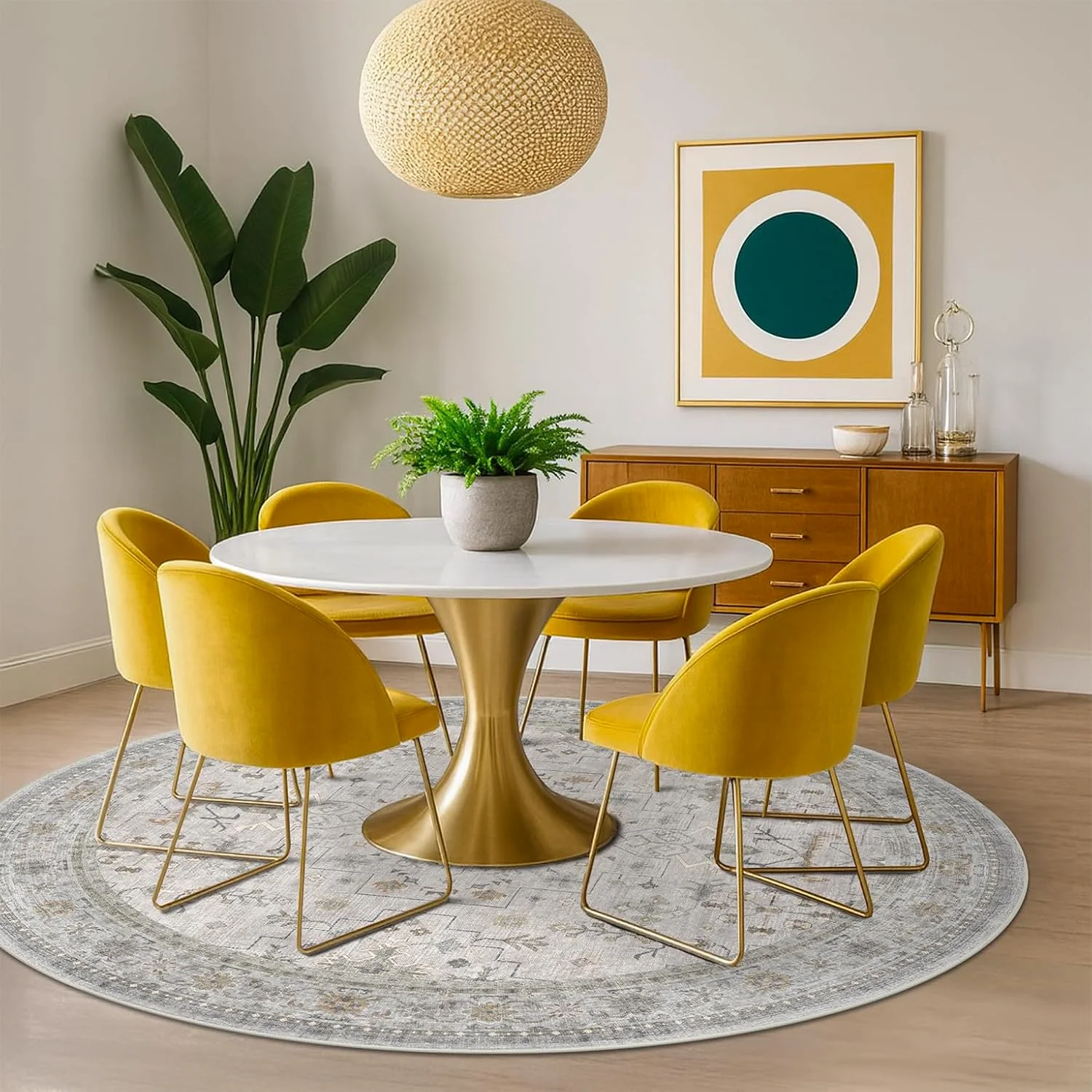
Rounds, ovals and squares carry the same designs into rooms that rectangles fight: a round under a pedestal table, an oval softening a nursery, a square under a square arrangement. The round sizes run 3 to 8 feet across, and one owner of an 8 foot square reports it seating a table for six with room for the chairs to slide.
Kids rooms and playroom floors
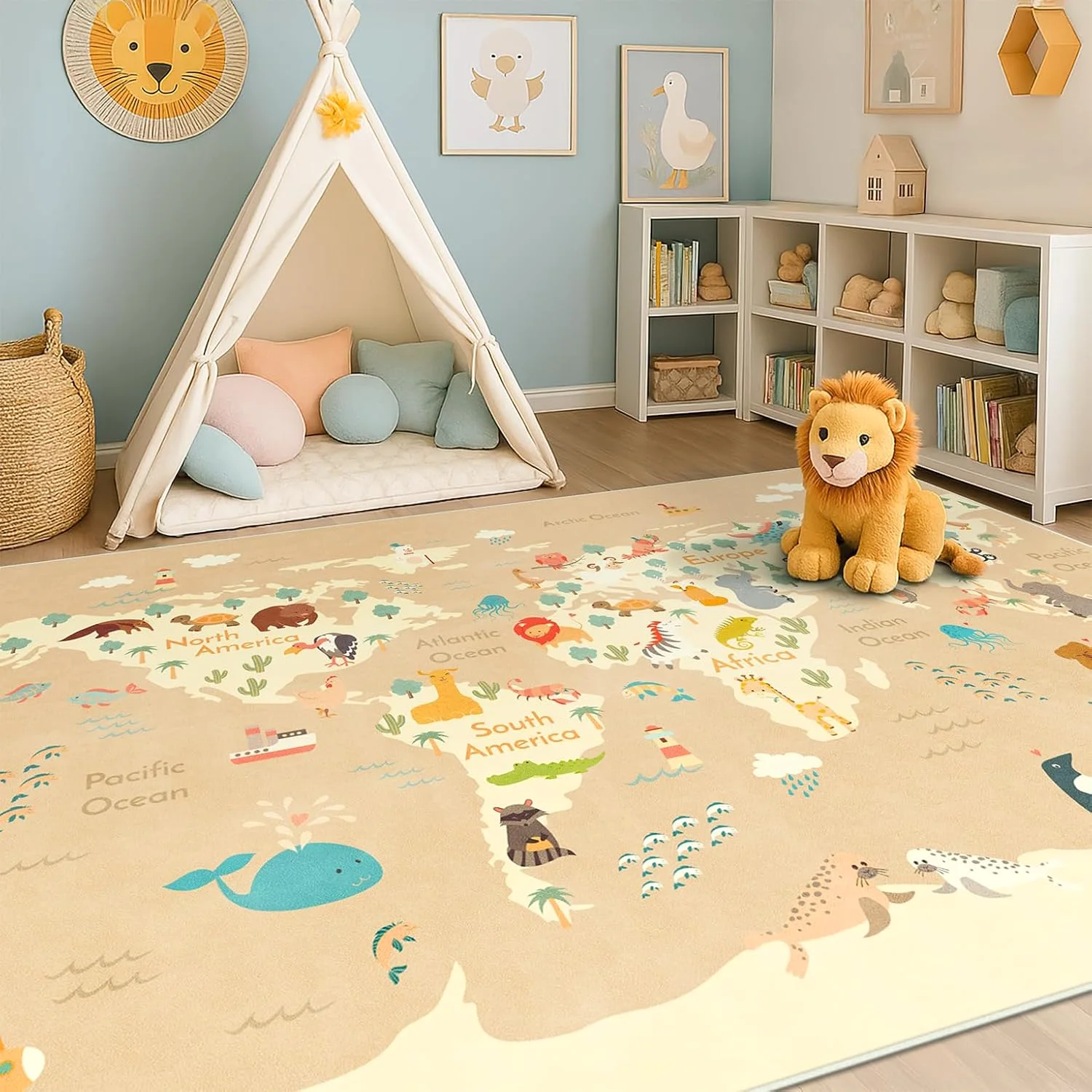
For a child's floor the sizing question flips: instead of framing furniture, you are buying usable ground. The kids shelf runs from 3x5 up to 8x12, and the two sizes we point parents at first are the 4x6, which fits beside a toddler bed, and the 5x7, which is the classroom and playroom standard among our reviewers, teachers included. Under it all sits the practical spec of the rest of the catalogue: quarter-inch pile so blocks stack level and doors clear, non-slip backing, and a print that goes through the machine after the inevitable.
Three mistakes the charts do not mention
- Buying to the room, not the furniture. The chart says 8x10 fits the room; the sofa says the rug ends two inches short of its front legs. The sofa is right. Measure the furniture group first.
- Forgetting the swing of doors. Any rug near a door needs the clearance check from the entry section above. This is the most common reason a well-chosen rug gets returned.
- Sizing runners by length alone. A 2x10 in a 3'6" hall leaves a wide floor margin that reads as an error. In wide halls, step up to the 2'6" and 3 foot widths.
Every cut named in this guide is in stock across the five shelves of the HazoHaus catalogue, and each design page lists its full size table with the current figures from our latest update. If the size you need sits between two cuts, take the larger: a rug an inch generous reads as intended, an inch short reads as a miss. And once it is down, the washing side of ownership has its own guide.
Sources opened and read on 2026-08-06: Asthma and Allergy Foundation of America, How Can I Control Indoor Allergens and Improve Indoor Air Quality?; National Institute on Aging, Preventing Falls at Home: Room by Room; American Academy of Pediatrics, Back to Sleep, Tummy to Play (HealthyChildren.org).