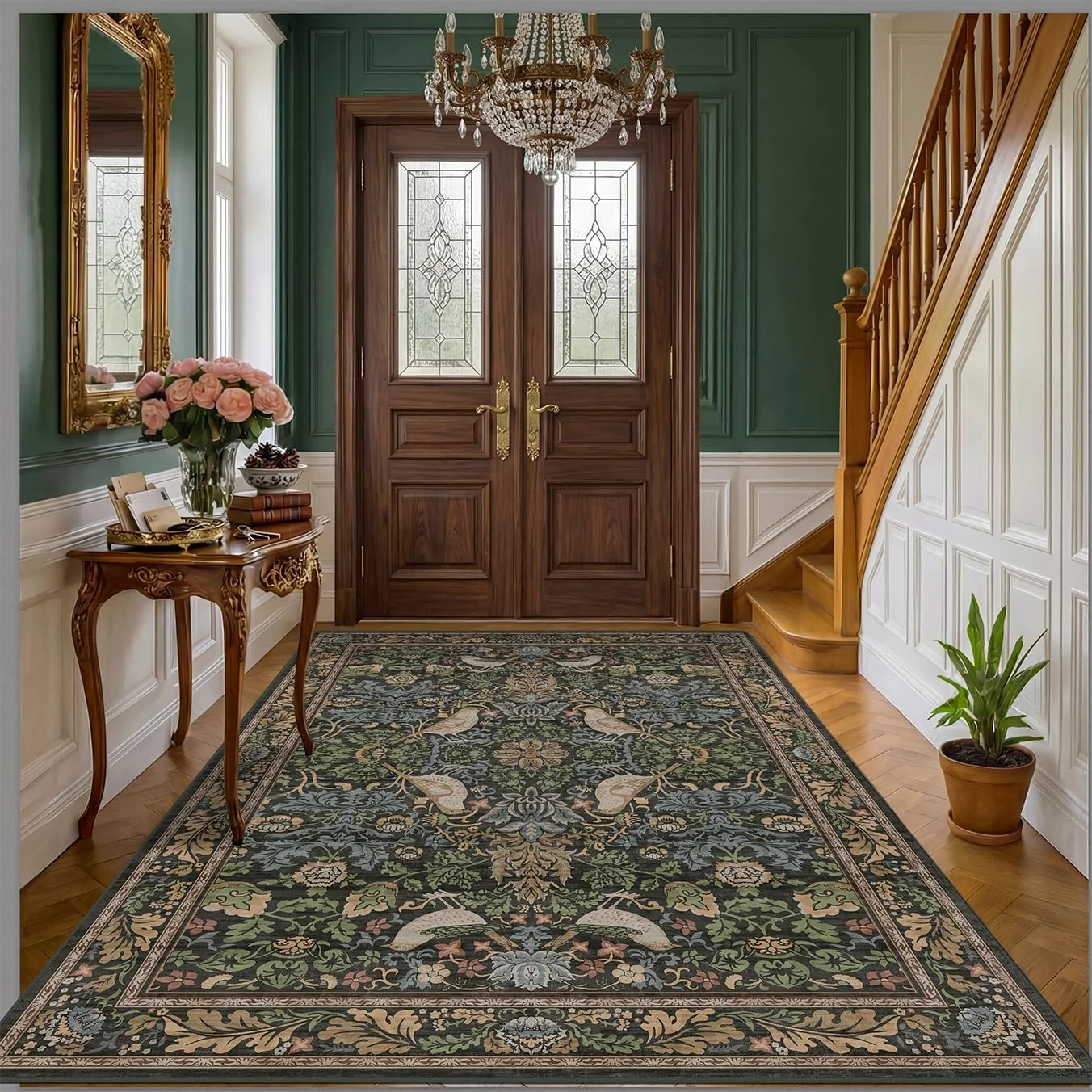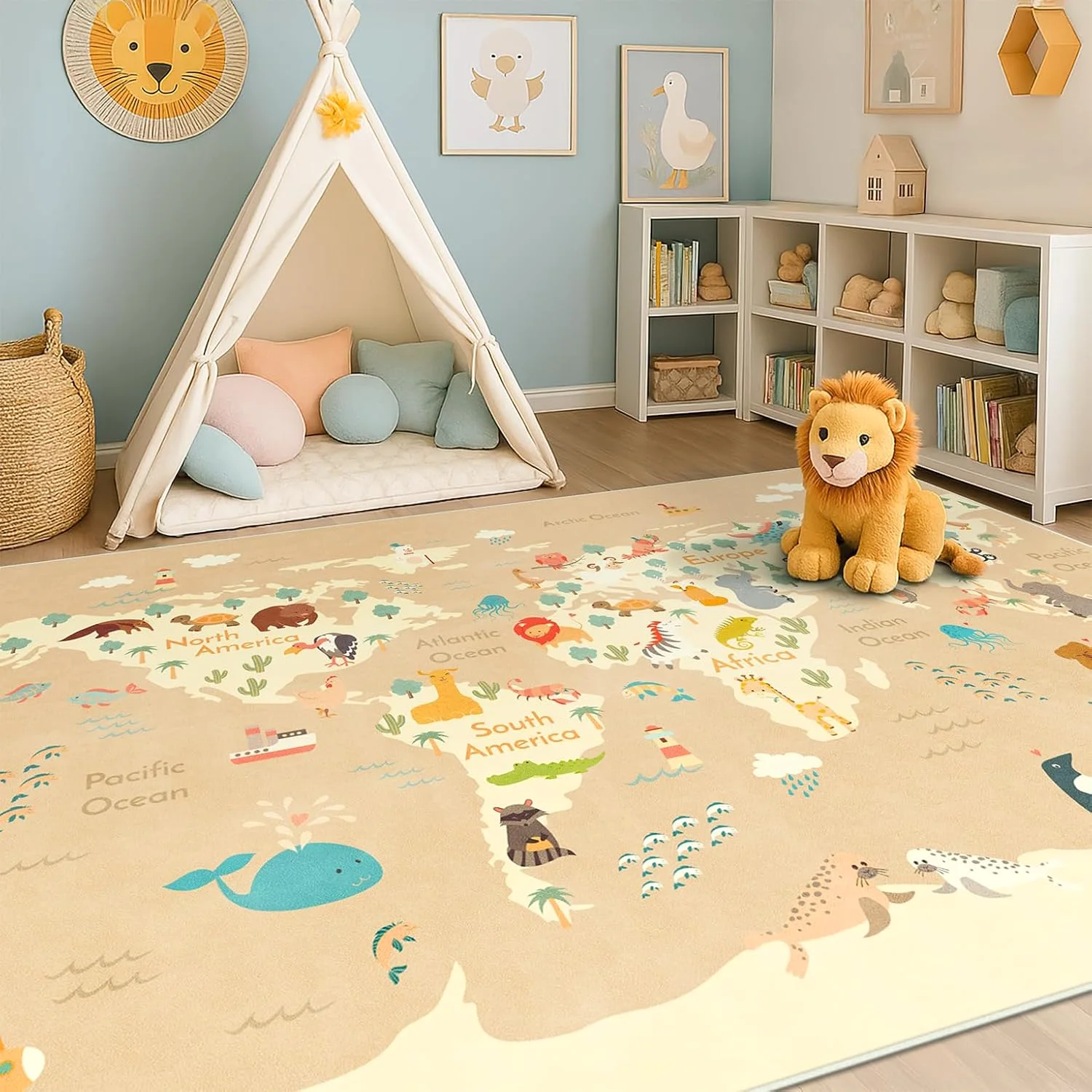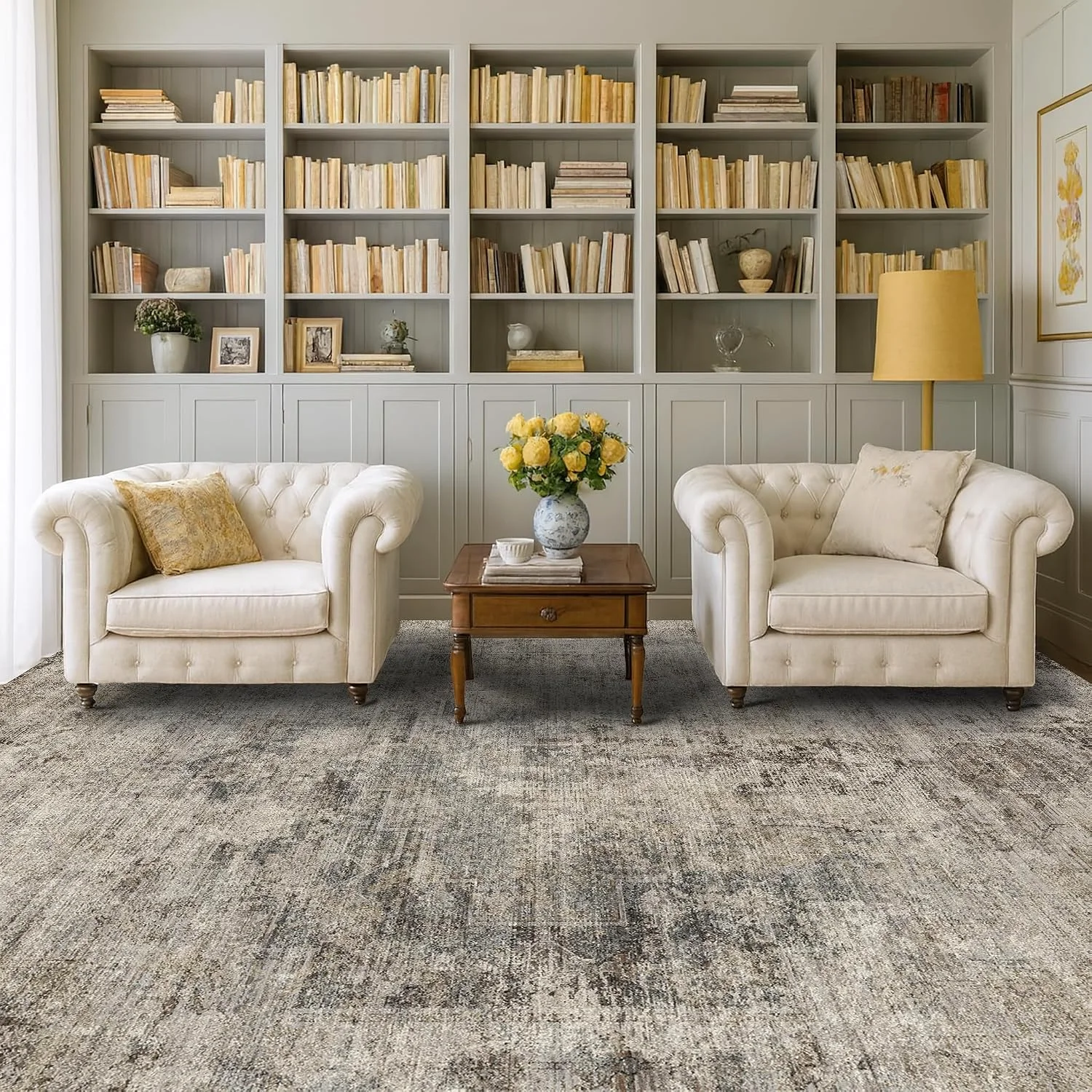
The honest anatomy of a washable rug
A traditional rug is a textile monument. Wool or nylon is tufted or woven into a backing, sheared into a pile, and the result weighs enough that moving it is a two-person job. Nobody launders such a thing at home. When it truly needs cleaning, it goes to a specialist, on a van.
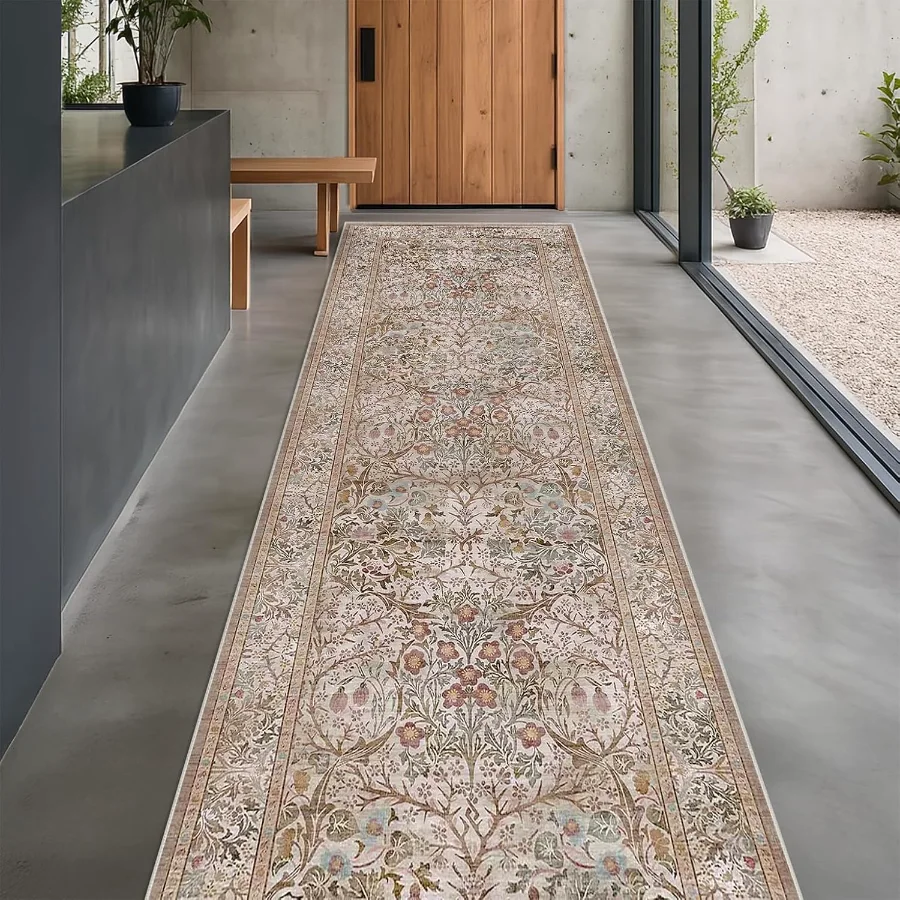
A washable rug starts from the opposite question: what would a rug look like if the washing machine were part of its life from day one? The answer has three layers. The surface is a dense, short polyester face, about a quarter of an inch tall, with the design printed into the fibre rather than woven from coloured yarns. Under it sits a thin bonded core that gives the face its body. The underside is a non-slip rubberised backing that grips hard floors without any glue or tape.
Every design in the HazoHaus washable rug catalogue is built this way, and each one states it plainly in its own specification: low pile, non-slip backing, machine washable. The build is the brand.
Thin is a feature, and owners say so themselves
The first thing every new owner notices is how thin the rug is, and we would rather quote them than talk over them. One reviewer of our boho shelf put it exactly right: if you have had machine washable rugs before, you understand that they are thinner compared to traditional rugs, and this is what allows them to be machine washed. Another, reviewing a kids design, was blunter: the carpet is sturdy and durable, but buy padding if you want cushion.
Both are correct. A rug that folds into a washing machine drum cannot also be an inch of plush. What the low profile buys you in exchange:
- Doors clear it. A quarter-inch rug slides under an opening door, so it can sit exactly at the threshold where dirt actually arrives. Several of our runner owners chose their cut for precisely this reason.
- Robot vacuums treat it as floor. A thick rug is a wall to a robot vacuum. A low-pile one is a speed bump, climbed without ceremony.
- Furniture stands level. Table legs and desk chairs do not wobble or dig craters into a dense low pile the way they sink into shag.
- It moves with you. A 5x7 in this construction weighs a few pounds. Rearranging a room, or taking the rug to the machine, is a one-person job.
If you want softness underfoot on top of that practicality, the fix costs little: a quarter-inch felt rug pad underneath. You keep the washability and gain the cushion. Owners in our reviews describe doing exactly this.
The wash routine, step by step
The care rules below are the ones printed for our own catalogue. They are short because the product was designed so they could be.
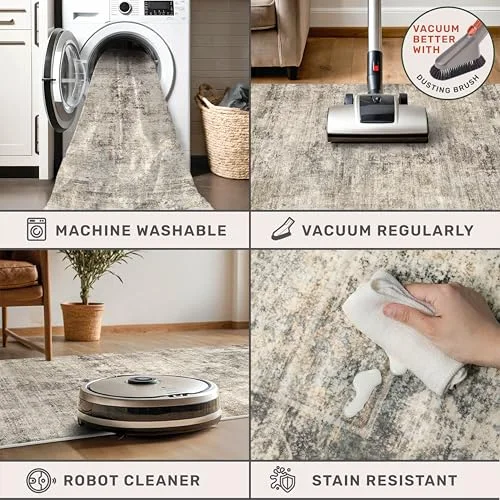
- Vacuum first. Grit is abrasive in a wash drum. A quick pass means the machine handles stains, not stones.
- Shake the small cuts outdoors. For doormat sizes, half the cleaning is a good shake.
- Fold, do not wad. Fold the rug loosely with the pile inward and place it in the drum. One rug per load; it needs room to move.
- Cold water, gentle cycle, mild detergent. Skip bleach and skip fabric softener. Softener coats the fibre and dulls the print.
- Dry low or air dry. A low tumble setting for a short cycle relaxes the rug; high heat is the one thing that can hurt the backing. Finish flat on the floor.
Which sizes fit which machines
The honest limit of a washable rug is the drum it must fit. As a working rule:
| Rug cut | Machine that handles it | Note |
|---|---|---|
| 2x3, 2x4, 3x4, small rounds | Any household machine | Washes like a heavy bath mat |
| 2x6 to 3x8 runners, 4x6 | Standard 4 to 4.5 cu ft drum | Fold lengthwise first |
| 5x7, 5x8, 6x8 | Large 4.5 to 5 cu ft drum | Loose fold, wash alone |
| 6x9 and up | Oversize or commercial drum | A laundromat machine handles what yours cannot |
One of our classroom owners noted that her machine was on the smaller side for a 5x7 and that a thorough rinse mattered. That matches our experience: a big rug in a small drum washes poorly. When in doubt, the laundromat's oversized machine costs a few dollars and removes the doubt.
Creases: the unboxing truth
Washable rugs ship folded in a compact bag, not rolled on a tube, and they arrive with fold lines. This is normal, temporary and worth knowing in advance. Most lines relax flat within a week of lying under normal foot traffic. Owners who wanted them gone sooner report two working shortcuts: fifteen minutes in a dryer on low before first laying, or reverse-rolling the stubborn line for an evening. We would add one caution to the first trick: low heat only.
What a printed pattern means for wear
The design on these rugs is printed into the face fibre, not woven through the body. Printing is what makes fifty designs at these prices possible, and it is also an honest trade: the pattern lives in the top of the pile. In practice owners report the print holding through repeated washes, and one of our entryway reviewers specifically bought this construction again after a woven washable from another maker frayed in her machine. But a printed rug dragged daily under a grinding chair leg will show it sooner than a hand-knotted heirloom. That is the deal, stated plainly.
Where wear resistance matters most, pick darker, busier patterns from the vintage shelf: the faded look is printed in from the start, so life's additions blend instead of announcing themselves.
Where to start
If this is your first washable rug, start where the washing machine earns its keep fastest: the doorway, the kitchen run, the space under a toddler. That is a 2x3 or a runner from the boho or vintage shelf, or a design from the kids shelf if the toddler is the point. Every cut of every design in the HazoHaus catalogue shares this same construction, so whichever pattern you pick, the machine part is already solved. Sizing is its own decision, and it has its own guide.
Sources opened and read on 2026-08-06: Asthma and Allergy Foundation of America, How Can I Control Indoor Allergens and Improve Indoor Air Quality?; National Institute on Aging, Preventing Falls at Home: Room by Room; American Academy of Pediatrics, Back to Sleep, Tummy to Play (HealthyChildren.org).